Let’s Break Down What Copy Trading Is
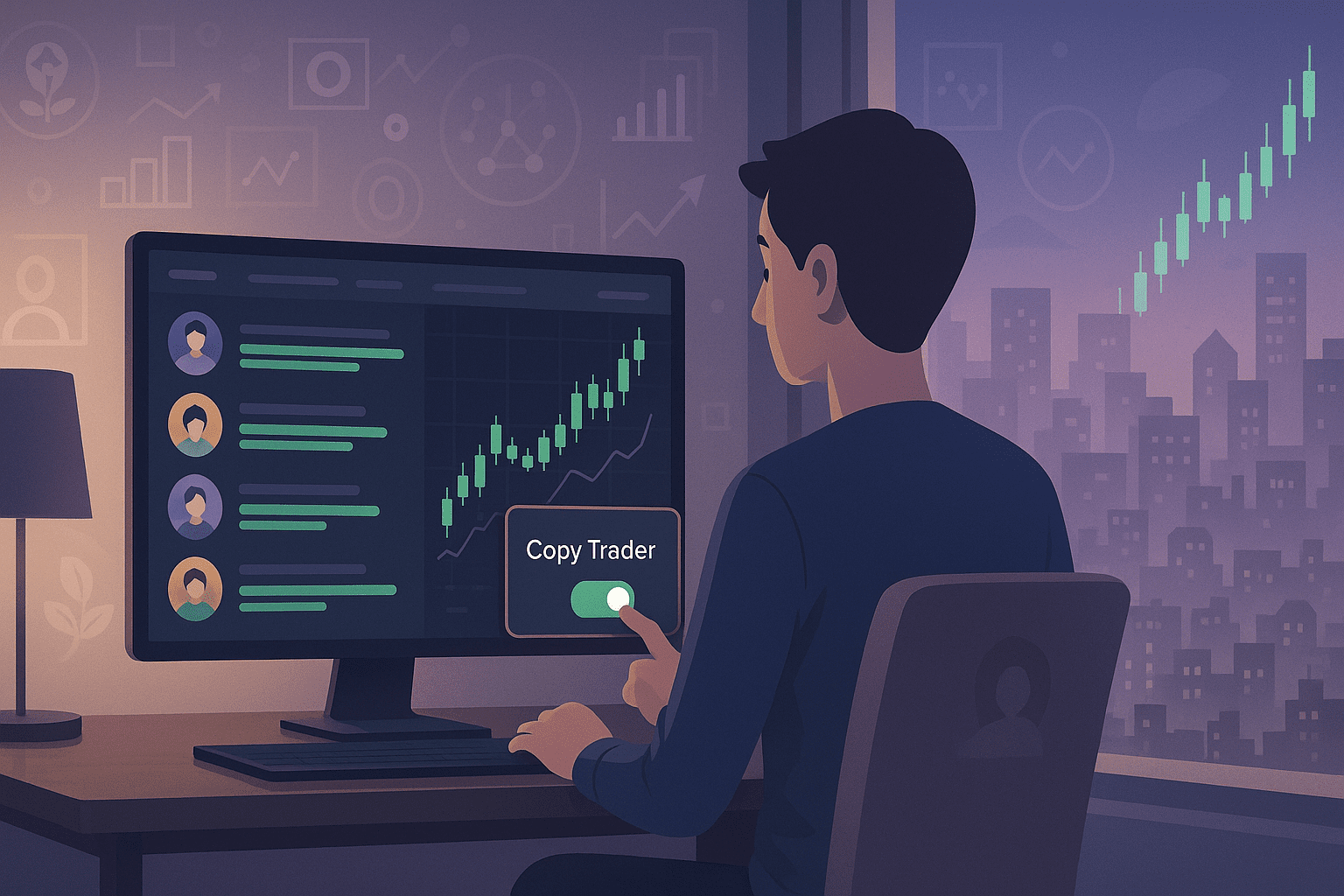
So, what is copy trading? Imagine you’re in a classroom, sitting next to the top student. Instead of solving problems by yourself, you just copy what they do. When they take notes, you take notes. When they answer a question, you use the same logic. That’s essentially copy trading, but applied to investing.
You basically let someone more experienced make trades, and your account follows them automatically. It’s a way to access someone else’s market knowledge.
What’s Happening Behind the Curtain
Copy trading sounds simple and it is, kind of. But here’s what’s actually going on:
You find a trader you like. The platform then takes the trades they make and mirrors them in your account. If they buy gold, so do you. If they sell Tesla, so do you.
How a Copy Trade Actually Plays Out:
| Step | What Happens |
| 1 | You pick a trader based on their track record |
| 2 | Decide how much money you want to copy them with |
| 3 | The platform mirrors their trades for you |
| 4 | You gain (or lose) depending on their performance |
You don’t need to press any buttons, the tech handles everything.
What Makes Copy Trading Worth Considering
- Fully automated: You don’t have to manually buy or sell.
- User-friendly: Most apps make it easy to get started.
- Transparent: You get to see how each trader has performed before you copy them.
That’s why it’s become so popular, even folks who’ve never traded a day in their life are giving it a go.
Not Everything You Hear Is True
There’s a myth that copy trading is some kind of shortcut to instant riches. It’s not. It’s still investing, and that means there are risks.
Another common belief? That you don’t need to do anything at all. While the trades are automatic, choosing who to copy is a decision that really matters. Just because someone has flashy numbers doesn’t mean they’re right for your goals or risk tolerance.
“Even when trades are automated, the responsibility of who you follow, that’s still on you.”
Here’s What Makes It Actually Useful
People love copy trading for a few key reasons, and they’re not just about making money fast.
- You learn by watching: It’s like trading school, but live and with real money.
- It saves time: You’re not glued to charts all day.
- It reduces analysis paralysis: No need to overthink every move.
Say you’re a busy parent with limited time to research markets. Instead of trying to become a full-blown trader, you follow a few proven ones and let their decisions guide your investments, pretty handy.
So, Who’s Using Copy Trading Anyway?
Turns out, it’s not just Gen Z and finance nerds.
You’ve got:
- People who are totally new to investing
- Professionals too busy to trade on their own
- Even experienced investors using it to test new strategies
It really fits into all kinds of lifestyles. Whether you’ve got $100 or $10,000, there’s a way to get started.
Copy Trading vs Mirror Trading – They’re Not the Same
These two get mixed up all the time, but there’s a real difference:
| Feature | Copy Trading | Mirror Trading |
| Who’s Behind It | Real trader | Algorithm or model strategy |
| How It Works | You follow a person | You follow a coded system |
| Flexibility | High | Lower |
| Popularity | Widely used | More niche, sometimes institutional |
With copy trading, you’re following a human being and their decision-making. Mirror trading is more robotic, like setting a rule and letting the system handle it.
Finding the Right Place to Start
Picking a platform matters. Here’s what to look for:
- Clear performance stats
- Low fees or fair commissions
- Easy to navigate interface
- Trustworthy – regulated if possible
Know the Risks Before You Dive In
Even with all the automation, risks are still part of the deal.
Some things to watch for:
- Market swings: You’re still exposed to volatility.
- Platform issues: Delays, bugs, or outages can affect trades.
- Blind trust: Don’t just follow someone because their last month was green.
Being passive doesn’t mean being clueless. Keep tabs on your portfolio always.
Is This All Legal? Completely, Yes.
In many places, like Europe and the UK, copy trading is regulated and completely legal. In the US, it’s a bit more complicated due to tighter financial rules.
Before you start, check if the platform is licensed by major authorities like:
- FCA (UK)
- CySEC (Europe)
- ASIC (Australia)
If it is, that’s a good sign.
Crypto Copy Trading Is Catching On Fast
Crypto is a wild ride but yes, you can copy trade it too.
Platforms like TvMarkets let you follow crypto-specific traders. But crypto moves faster and is way more volatile than traditional assets.
So if you’re copying in crypto, pick traders who use smart strategies like stop losses or diversification.
Let’s Talk About the Money
Most platforms don’t charge you upfront, but they do take a piece of the pie.
Here’s a breakdown:
| Fee Type | Description |
| Performance Fee | A cut of your profits (often 10–30%) |
| Spread Fees | Built into the price when buying/selling |
| Subscription | Sometimes charged monthly for premium features |
Read the fine print. Some platforms look cheap but have hidden costs.
Want Better Results? Here Are Some Smart Moves
- Diversify: Don’t follow just one trader.
- Set alerts: So you know when performance changes.
- Do some homework: Learn a bit about each trader’s strategy.
“The more you know about who you’re copying, the better your outcomes will be.”
What’s Coming Next?
Expect better recommendations from AI. Look for more social trading features like leaderboards and chat feeds. We will also have tools that make investing feel more like a game.
This space is evolving fast. If you’re curious about investing but don’t want to dive in headfirst, this is one of the easiest (and most flexible) ways to get started.
Thinking about giving it a shot? There’s no pressure to go big right away. Start small, test the waters, and see what works for you.
FAQs
Is copy trading allowed in the US?
Yes, but it’s more restricted due to regulatory rules. Always double-check platform availability.
Can I lose money doing it?
Yep, it’s still investing. Gains aren’t guaranteed, and losses are possible.
What’s different from robo-advisors?
Robo-advisors use algorithms. Copy trading involves real people and real strategies you choose to follow.
Do I need any prior trading experience?
Nope, but a basic understanding helps you choose better traders.
Can I stop anytime?
Absolutely. Most platforms let you stop copying or switch traders whenever you want.What’s the minimum I need to get started?
It varies, but some platforms let you begin with just $100.


Copyright © 2025. All rights reserved.
Address: Los Mirtos 239 Urb. San Eugenio, Lince, Lima, Peru.
Email: info@vulkanbrokersolutions.com
The services and products above are not being offered within the United States (US) and not being offered to US Persons, as defined under US law.
The information on this website is not directed to residents of any country where FX and/or CFD trading is restricted or prohibited by local laws or regulations.